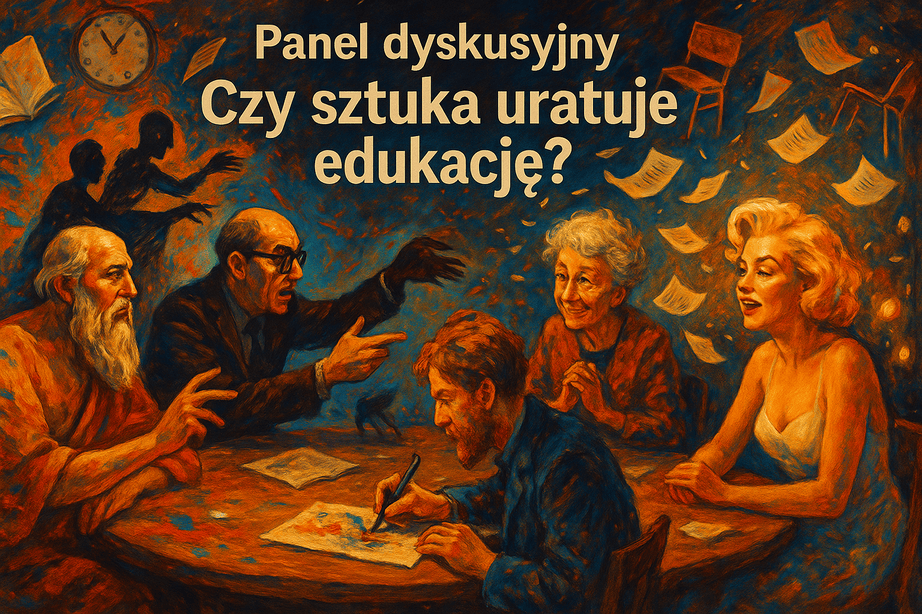
Panel Discussion: ‘Will Art Save Education?’
9 June 2025 | Cogiteon
This won’t be a typical panel. It won’t be about trends, innovations, or how to “embed creativity in the curriculum.”
It will tackle something more basic: Is education still alive?
Can you teach without creativity?
Can you guide a person through the system without losing them along the way?
We’ve invited voices that rarely sit at the same table:
Plato and Kantor. Wyspiański and Witwicki. Szymborska and Marilyn Monroe.
Not as textbook quotations, but as questions, provocations, consciences.
Because perhaps Marilyn shows best how easily a human can be turned into an icon, an image, a tool. Doesn’t school sometimes do the same to us?
We’ll ponder:
Is art merely an aesthetic extra, or the last hope for education?
Can AI grasp what it means to create if it cannot feel?
Can school be a place of living encounter—rather than mere data transfer?
This won’t be a panel of ready‐made solutions.
It won’t suit those who “like concrete answers.”
It’s a space for those who still ask “why?”
for those who feel that without art in school, only the system and an empty silence remain.
And perhaps, after this panel, your soul will be stirred. And that will already be a very, very great deal.
Our speakers:
dr hab. Paweł Polak, prof. UPJPII
Paweł Polak is a philosopher and professor at the Pontifical University of John Paul II in Kraków (Chair of the History and Philosophy of Science and Technology). His research interests span relations between science and religion, the history of Polish philosophy, and the history and philosophy of science and technology. A special focus of his work is philosophical propaedeutics as an educational method suited to the challenges of modernity—particularly within the tradition of the Lvov–Warsaw School.
He chairs the Commission for the Philosophy of Science of the Polish Academy of Arts and Sciences and serves as editor-in-chief of the journal Zagadnienia Filozoficzne w Nauce (Philosophical Problems in Science), founded by Michał Heller. He is a member of several international scholarly societies, including the International Society for the History of Philosophy of Science (HOPOS), the Society for Philosophy and Technology (SPT), and the Copernicus Center for Interdisciplinary Studies.
Polak has published on the history of Polish philosophy, the theology of science from a methodological perspective, and interactions among science, philosophy, and theology in relation to evolutionary theory, relativity theory, and concepts of entropy. His book on the reception of Einstein’s theory of relativity in Poland, I Was Your Opponent [Professor Einstein]… (Kraków 2012), earned him the inaugural Jan Jędrzejewicz Prize in the history of science.
dr hab. Katarzyna Potyrała, prof. PK
Dr Hab. Katarzyna Potyrała, Professor at Cracow University of Technology, researches the synergy between new media and didactics, digital safety, media pedagogy, the transformation of schools in the face of social change, teacher education, education for sustainable development, and the cultural-social competences of teachers and students. She also studies science communication and mediation, as well as ways to adapt academic knowledge to different educational levels. She is the author or co-author of roughly 250 works—monographs, scholarly articles, and school and university textbooks—in Polish, English, and French. She is a member of the CIMEOS research laboratory (Communications, Médiations, Organisations, Savoirs) at the University of Burgundy in Dijon, of the Pedagogical Sciences Committee of the Polish Academy of Sciences (Kraków branch), and of numerous international project teams. She directed the transnational project “Animating Natural Culture as an Opportunity on the Labour Market” (NCBiR, 2015) and serves as an expert for the European Commission in Brussels on Horizon 2020 and Horizon Europe projects.
Katarzyna Potyrała is editor-in-chief of Edukacja Biologiczna i Środowiskowa—a journal on the Polish Ministry of Education and Science list—published by the Educational Research Institute in Warsaw. She belongs to several national and international scholarly societies and sits on the editorial boards of multiple international journals. From 2008–2011 she was a member of the Polish Accreditation Committee (PKA), and from 2011–2022 an expert for that body. Since 2011 she has organized the annual International Scientific Seminar “Science–Society–Didactics.” She also serves as a reviewer in doctoral and habilitation proceedings.
dr hab. Nina Podleszańska
Dr Hab. Nina Podleszańska is a Hispanist, researcher, and translator of contemporary Spanish-language literature (Juan José Saer, Felisberto Hernández, Roberto Bolaño). She currently heads the Department of Spanish Philology at the Institute of Romance Philology, Jagiellonian University. Her work explores the links between literature and popular culture and the impact of socio-political factors on contemporary Spanish prose.
She is co-author of Historia literatur iberoamerykańskich (History of Ibero-American Literatures, Ossolineum) and of a monograph on the crime convention in Hispano-American prose, La sombra del crimen (Pedagogical University Press). Her scholarly and popular articles have appeared in Tygodnik Powszechny, Literatura na Świecie, Teksty Drugie, Politeja, Castilla. Revista de Literatura, and Revista Iberoamericana, among others.
Podleszańska advocates taking theoretical and literary-historical knowledge beyond the university: she encourages students to collaborate with cultural institutions, publishing houses, and literary festivals.
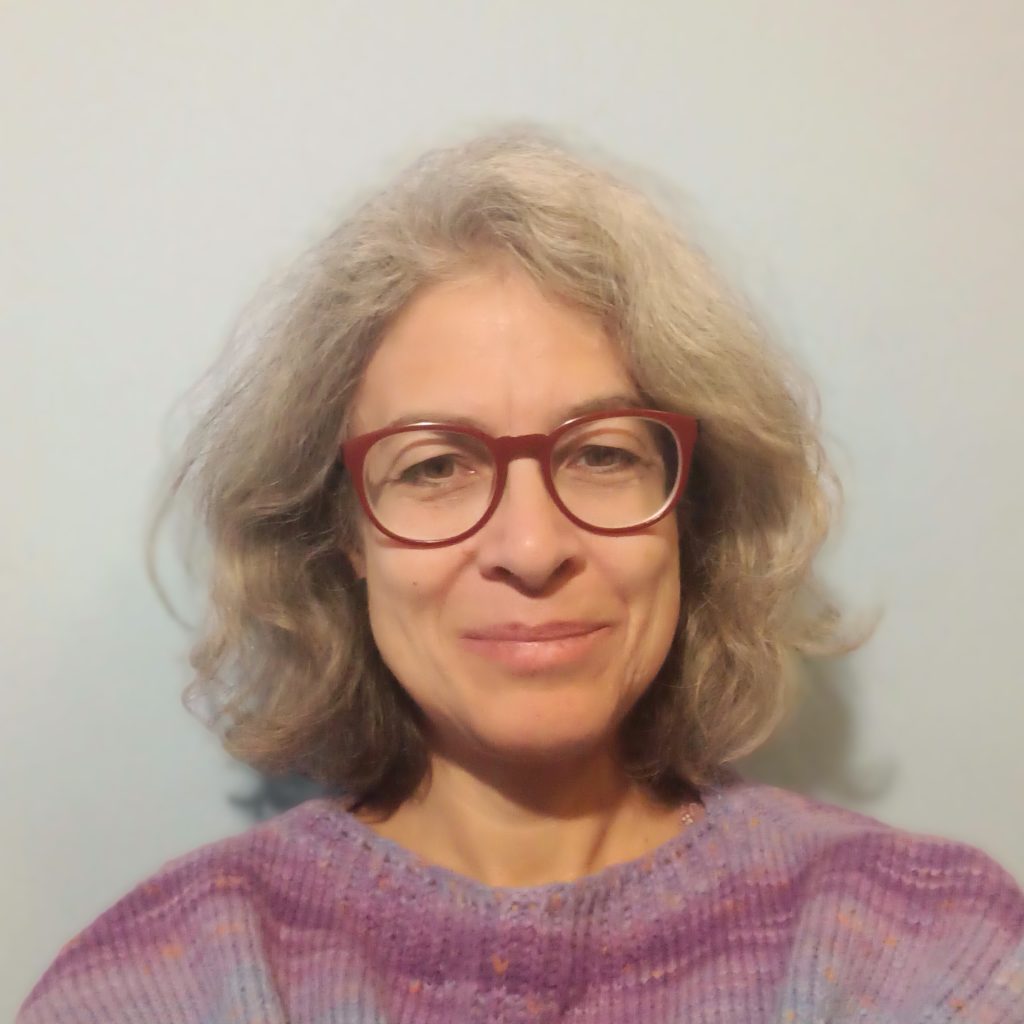
dr hab. Jacek Jaśtal, prof. PK
Jacek Jaśtal holds degrees in Basic Problems of Technology (Cracow University of Technology, 1988) and philosophy (Jagiellonian University, 1990); he earned his PhD and habilitation in philosophy (1995, 2010). His research spans ethics, social philosophy, the history of ideas, theoretical sociology, and the relationships between social change and technological innovation.
Key publications include: Natura cnoty. Problematyka emocji w neoarystotelesowskiej etyce cnót (2009); Etyka i czas. Wariacje aretologiczne (2015); Czas i bezczasowość. Konstrukcje społeczne i doświadczenie osobowe (with I. Butmanowicz-Dębicka, 2018); and Nadzieja z Melos. Przyczynek do debaty nad pojęciem elpis (2021). He has also translated, among others, Niklas Luhmann’s Pisma z socjologii moralności (2023) and the anthology Etyka i charakter (2004).
Jaśtal teaches courses on philosophy, philosophy of technology, artificial intelligence, social psychology, organizational communication, negotiation, and mediation.
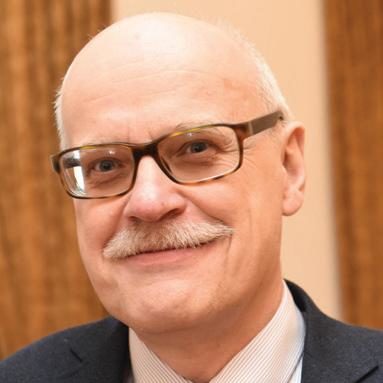
Dr. Eng. Arch. Farid Nassery
Farid Nassery is a graduate of the Faculty of Architecture at Cracow University of Technology. Since 2002, he has been working at the Department of Descriptive Geometry and Digital Technologies at the same faculty. In 2003, he completed the Postgraduate Pedagogical Studies for University Graduates at CUT. He earned his PhD in the discipline of architecture and urban planning in 2010 and, in 2016, completed postgraduate studies in the conservation of architectural and urban heritage. His scientific interests focus on geometry in architectural structures, as well as computer graphic programs for architectural design — particularly BIM — and multimedia teaching tools in the education of spatial representation. He is the author of 18 scientific publications and a co-author of 42 more.
Since 1997, he has been actively involved in the student research society movement. He founded the student research group IMAGO and currently serves as its faculty advisor. Since 2019, he has been the Dean’s Representative for Student Research Societies at the Faculty of Architecture, and since 2024, he has chaired the Council of Dean Representatives for Student Research Societies. In 2024, he also became the Chair of the Polish Teachers’ Union at Cracow University of Technology. He is also a practicing architect, holding an unlimited architectural design license since 2011, and is a member of the Małopolska Regional Chamber of Architects. His passions include traveling, discovering urban spaces and meeting the inhabitants of European cities. He is a museum and culinary enthusiast, and a collector of beautiful objects, especially from the Art Deco period.
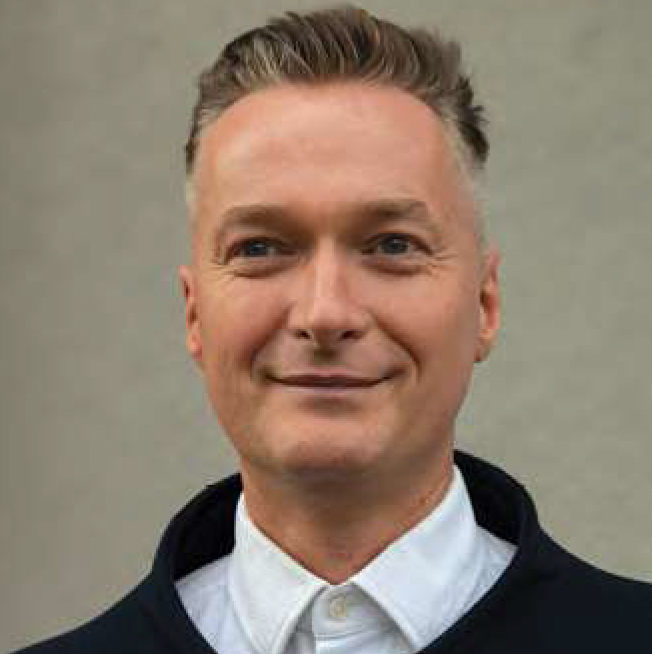
Jagoda Gumińska-Oleksy
A graduate of art education at the Faculty of Art of the Pedagogical University of Krakow (UKEN), where she earned her degree with a diploma in traditional printmaking. She still occasionally paints, but since life without art – or solely with art – would be difficult for her, she pursues her professional career as a museum educator, working in the Education Department of the National Museum in Krakow. For many years, she created museum programs for children and families, and she now also develops educational content for adults, school students, and other audience groups. She is involved in various educational projects, especially those based on audience participation (e.g., with youth or teachers). She leads training sessions for museum educators and conducts art workshops for children and families – a role she greatly enjoys.
She finds great satisfaction in writing, particularly for children, as it allows her to weave knowledge about art into fictional narratives. She is the author of “Tales of Objects, or Fables Overheard in the Museum” and the co-author of “A Few Tales about Jan Matejko.” She has also created concepts and texts for numerous educational materials and museum exhibition guides.
She was honored by the Children’s University in the “Lecturer of the Year” poll and is a recipient of the “Meritorious for Polish Culture” decoration. She believes in fairy tales, loves cherries, fresh broad beans, and holidays, and still hopes that one day she will manage to step inside her favorite paintings. She openly admits that her school memories would have been much more pleasant if there had been more art and music classes.